New Horizons spacecraft wakes up after long hibernation in the far reaches of the Solar System
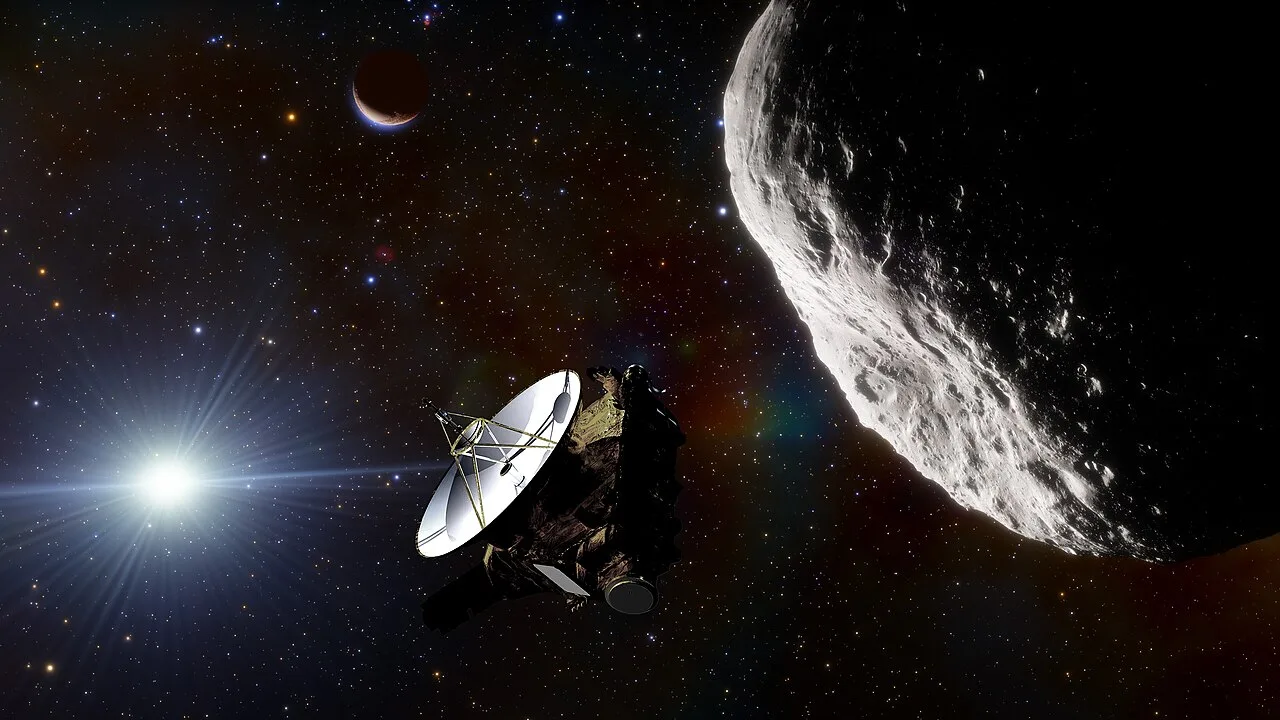
NASA's revolutionary mission to explore Pluto and distant objects in the Solar System has passed through a key stage. The New Horizons spacecraft has "woken up" from its longest period of hibernation, located at a distance of about 9.5 billion kilometers from Earth.
The planned sleep mode began on August 7, 2025, with the spacecraft reactivating on June 23 through pre-programmed commands in its main computer. The team from the Johns Hopkins University Applied Physics Laboratory confirmed that the probe's condition is excellent and it is ready to begin transferring scientific data collected during the period of rest.
Currently, New Horizons is located in the region of icy objects known as the Kuiper Belt. This is a zone full of trans-Neptunian objects (TNOs) – remnants from the formation of the Solar System 4.5 billion years ago. In 2015, the probe made a historic flyby of Pluto, and in 2019, it explored the object Arrokoth.
The current phase of the mission is focused on investigating the rotation speed, shape, and orientation of icy bodies in the Kuiper Belt. According to scientists, this data will provide answers to the question of how planets are born from dust and rocks. Additionally, the spacecraft is measuring the distribution of gas in the outer heliosphere and galactic cosmic rays, which is critical for understanding the protective "shield" of our Solar System.
"Hibernation" modes are a proven method for extending the life of space probes by conserving energy and resources during long journeys. Since the start of its mission in 2006, New Horizons has undergone similar periods more than 20 times. The spacecraft's current mission is planned to continue until 2029, but there is a possibility it could be extended if its technical condition remains stable.

Comments (0)