20 Quadrillion Ants: Scientists Reveal Incredible Scale Equal to the Weight of All Wild Mammals
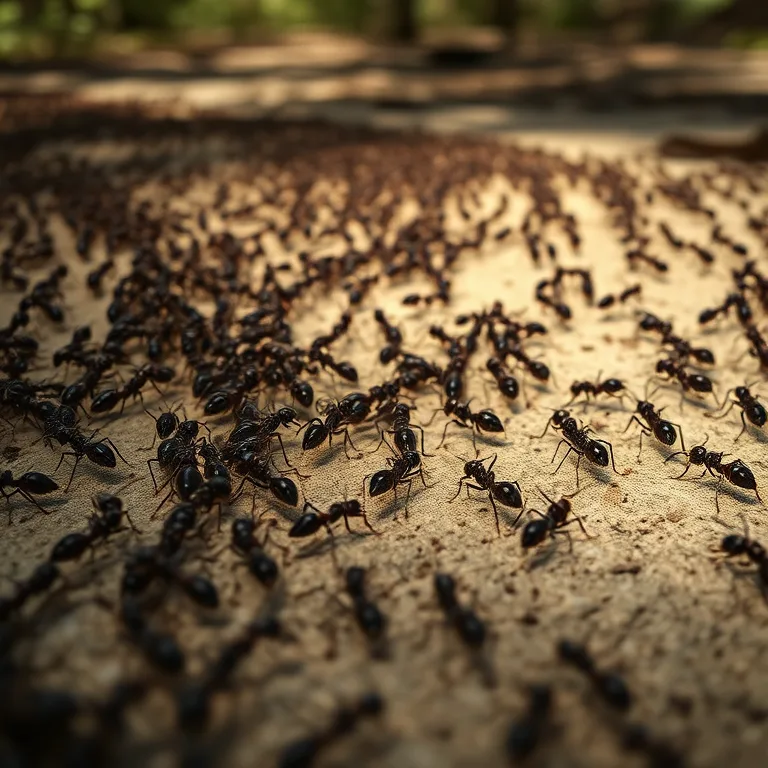
A new scientific study reveals incredible facts about the role and scale of ants in the global ecosystem. According to calculations, the total weight of all ants on the planet is approximately equal to the total biomass of all wild mammals and birds.
Researchers estimate that there are currently about 20 quadrillion ants living on Earth. Their total mass is equivalent to 12 megatons of dry carbon, which is more than one-fifth of the biomass of all of humanity. In comparison, there are approximately 2.5 million ants for every single living person on the planet.
Large-scale Calculations and Methodology
To reach these figures, scientists analyzed 489 individual field studies from all continents except Antarctica. The studies cover diverse ecosystems – from tropical forests and savannas to urban parks and deserts. Decades of work with traps and soil litter samples allowed the team to collect sufficient data for this massive census.
Ecological Impact
Ants are not just a number; they are active ecosystem engineers. In the Brazilian savanna, Atta ant colonies move between 8 and 40 tons of soil per hectare every year. In the Amazon, leaf-cutter ants process about 17% of the plant biomass, which is more than all the large herbivorous mammals on the continent do.
However, their distribution is highly uneven. The highest concentration is observed in tropical forests and savannas, which account for two-thirds of the total biomass. As one approaches the poles, their density drops drastically due to lower temperatures and less vegetation.
Evolutionary Driver
The enormous numbers of these insects have made them a primary food base for many species. Following the extinction of the dinosaurs, many mammals developed specific adaptations to feed on ants. Species such as pangolins, echidnas, and anteaters have undergone evolutionary changes – elongation of the tongue, reduction of teeth, and strengthening of claws – to effectively extract food from nests.

Comments (0)