European transport network is not prepared for climate apocalypse: Forecasts of billions in damages
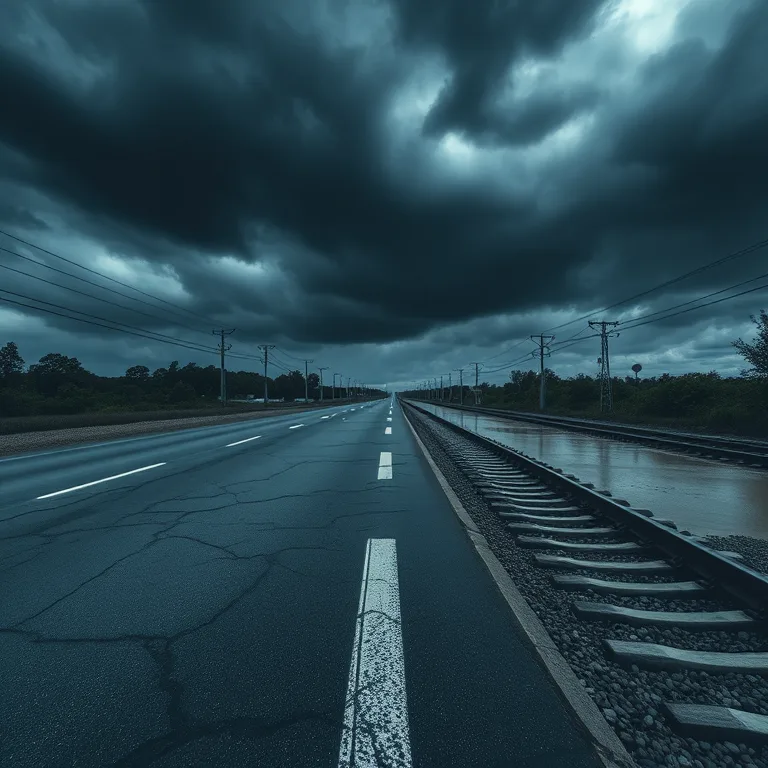
European transport infrastructure faces an unprecedented risk from climate change, warns a new international study conducted by the Vrije Universiteit Brussel (VUB). According to the report, existing roads, railway lines, ports, and inland waterways are not designed to withstand the increasing frequency and intensity of extreme weather events.
The project, funded by the European Commission, analyzes data from the last two decades and applies it to various climate scenarios. The results are alarming: in a global warming scenario of 3 degrees Celsius by the end of the century, the risk of exposure to extreme heat for European infrastructure could increase 30-fold compared to the 1980–2009 period.
Critical sectors and economic consequences
One of the most threatened sectors is inland shipping. Scientists predict that by mid-century, droughts could affect more than half of Europe's waterways, and by the end of the century, this percentage could reach 70%. The example of the Rhine river, which has experienced severe low water levels in recent years, shows how this could paralyze economic chains. In Germany alone, potential economic damages from such scenarios could exceed 2.4 billion euros.
Rail transport is also under serious threat. Heatwaves are already causing rail deformations and technical problems, especially with older train models, leading to mass route cancellations in France, Belgium, and the United Kingdom. By the end of the century, the risk of fires affecting tracks and rails could increase 26-fold.
Direct and indirect consequences
The study emphasizes that climate change does not only cause material damage. Transport delays and supply chain disruptions have a direct impact on economic activity and public health. A phenomenon is already being observed where passengers remain trapped on trains during heatwaves, leading to physical exhaustion and medical emergencies.
Professor Wim Teirlinck of VUB emphasizes that adapting the infrastructure alone may not be enough. According to him, the only sustainable path is the radical reduction of fossil fuel emissions to limit extreme scenarios. The European Environment Agency confirms these concerns, adding that even under more optimistic climate projections, the baseline level of risk for Europe will continue to rise.
Comments (0)